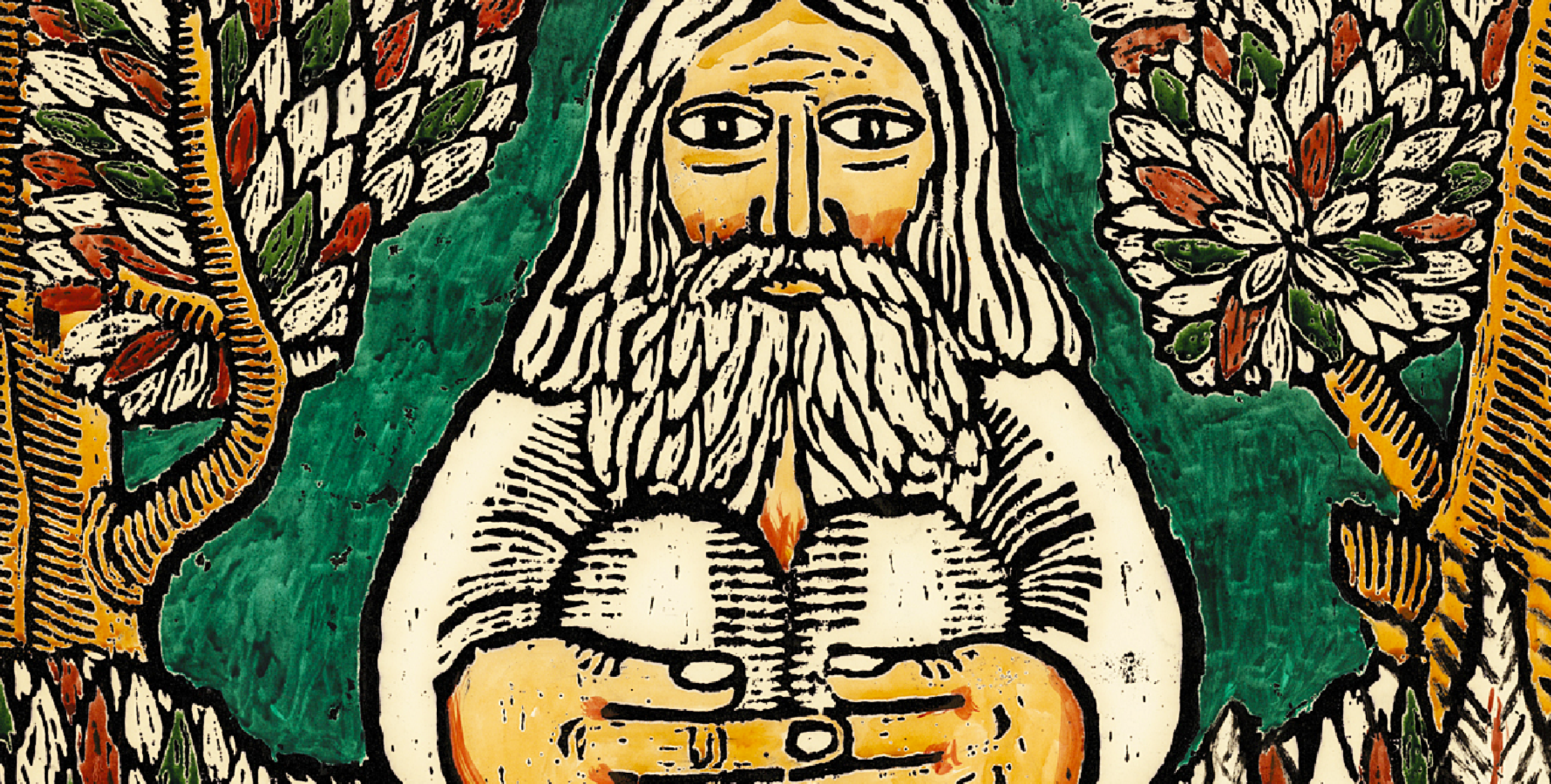
On Wednesday, 18 November, at 5 pm, an exhibition of works by Romanas Krasninkevičius, entitled “A Life Like a Novel”, will open at the Galaunė House Museum (Vydūno Ave. 2, Kaunas).
Can a name determine one’s fate? When we look at the life and work of Romanas Krasninkevičius (1926–1996), this question loses its rhetorical nature: his life truly became a novel (romanas) – a long, winding, dramatic story that carried over into his art, which itself became a kind of life chronicle.
Wartime and postwar experiences, the loss of loved ones, childhood memories, loneliness, and a love of his native land and folk songs became the themes of his work. Almost no life experience failed eventually to become a part of his art. Romanas’s life was also marked by loneliness, which over time became not merely a painful experience but a way of life he had chosen for himself.
ROMANAS is an exhibition about suffering and its transformation into art. For Romanas, suffering became a kind of muse of creativity – not an inspiration that kindles the imagination, but a force that compelled him to carve into the wood’s surface. He would transfer the blows of fate to the material impulsively, sometimes even tearing open a wardrobe door or grabbing a stool in a rage and furiously carving whatever pressed on him from within. His words “for me, art was a tragedy, a terrible tragedy!” are a blunt confession. Suffering was the material of Romanas’s creativity, its driving force and its price.
The visual language, compositional principles, and iconography of XVIII–XIX century folk woodcuts in his art take on new, autobiographical meanings. Krasninkevičius’s drawing style is concise, with bold contours and monumental figures. Poetic metaphors and texts incorporated into his woodcuts create a distinctive world where reality is intertwined with memories, dreams, and inner experiences. The characters in his woodcuts often resemble Romanas himself – with his full beard, build, and facial features.
ROMANAS is an exhibition about a man whose life was the foundation of his creative work, and for whom art became a way to endure and to immortalize what he held most precious.
Exhibition curator: Vilma Kilinskienė
Exhibition coordinators: Raimonda Mineikė, Silvija Burokaitė
Exhibition designer and architect: Lina Mozūraitė
Acknowledgements: Aušra Sedlevičiūtė, Monika Gineikienė, Romas Linionis, Audronė Šlyterienė, UAB „Užuovėja“, Marijampolė Regional and President Kazys Grinius Museum, Linas Citvaras, Rytis Želnys, Tautvydas Nomeika, Onutė Surdokienė, Aurelija Rukšaitė, the family of Romanas Krasninkevičius, Lithuanian National Radio and Television (LRT).
This is a public event and may be filmed and photographed. By attending, you consent to appearing in photographs and video recordings taken during the event and acknowledge that these images and recordings may be published publicly.