M. K. Čiurlionis National Museum of Art
K. Donelaičio g. 64, LT-44248 Kaunas (for correspondence)
V. Putvinskio g. 55, Kaunas (entrance for visitors)
Institution code 190755932

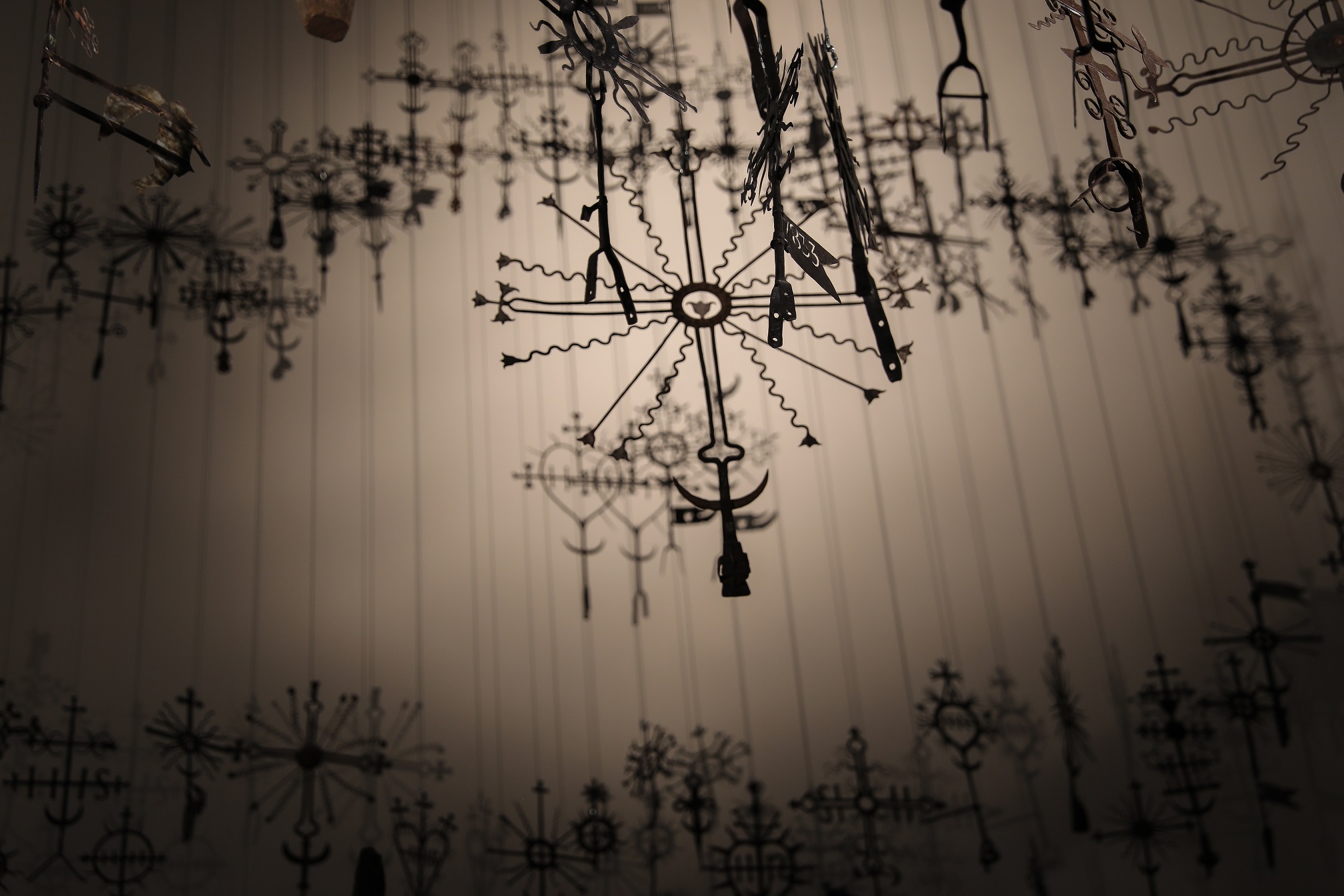
The exhibition is installed in the museum’s inner courtyard – a space previously unseen by visitors.
Lithuanian crosses are a unique cultural phenomenon. In 2001, Lithuanian cross-crafting was recognized by UNESCO as a Masterpiece of the Oral and Intangible Heritage of Humanity.
For Lithuanians, the cross holds a special meaning. Crosses were erected to honor the dead and seek spiritual protection. It is believed that in pagan times, wooden poles – predecessors of crosses – marked important places within homesteads and burial sites.
Christianity struggled to establish itself in people’s consciousness, as the cross was associated with the invasions of the Teutonic and Livonian Orders. However, the second wave of Christianization, successfully initiated by Jesuit monks in the 17th century, won over rural communities by giving old customs and symbols new Christian meanings. For example, Baltic symbols of the sun and moon began to be interpreted as symbols of Christ’s birth from the Blessed Virgin Mary.
Gradually, wayside shrines and crosses became abundant: in fields, homesteads, along roadsides, in forests, at crossroads, cemeteries, and sacred places. It is precisely this abundance that makes Lithuania unique.
Iron cross tops adorned churches, bell towers, roofed poles, shrine poles, and small chapels. The towers of town churches and bell towers were crowned with ornate finials created in blacksmiths’ guilds by skilled craftsmen. Many blacksmiths from larger villages and manors learned their craft from urban masters. In villages, however, most craftsmen were self-taught, developing both their own techniques and decorative styles.
Crosses, the sun, moon, stars, rhombuses, squares, and circles are Baltic symbols representing the structure of the universe, perpetual movement, the world tree, and the connection between earth and sky. With Christianity, ecclesiastical motifs gradually appeared and by the 19th and early 20th centuries intertwined harmoniously with older symbols. These included the monograms of Christ and Mary, the chalice, the Eye of Providence, and the heart – symbols of Christian love and hope.
Displayed here is an exceptionally rare shrine made from a hollow oak trunk known as a baublys. The inside of this hollowed log was whitewashed, and its cavities carefully sealed with clay; inside stood a small sculpture of a saint. The Lithuanian Christian tradition of placing a saint inside a baublys reaches back to pagan roots, when hollow trunks of ancient oaks were revered.
It is believed that cross-crafting flourished in the 19th and early 20th centuries. However, this impression may stem from the fact that during this period crosses began to be documented through drawings and photography. It may also reflect the growing role of the cross not only as a religious symbol but also as an expression of national identity. This became a silent form of resistance against occupying powers. The Russian Tsarist authorities prohibited the construction and repair of crosses, cutting them down and destroying them, permitting them only in churchyards and cemeteries, while Soviet authorities treated them even more ruthlessly. Yet the more crosses were destroyed, the more abundantly they were rebuilt. This is how the Hills of Crosses emerged throughout Lithuania.
Cross-makers themselves usually did not carve the saint figures. They decorated the crosses, while the sacred sculptures were created by folk sculptors known as dievdirbiai. In the 1930s, artists, historians, and museum professionals became deeply interested in this tradition, which is why a substantial amount of material about it survives today.





















M. K. Čiurlionis National Museum of Art
K. Donelaičio g. 64, LT-44248 Kaunas (for correspondence)
V. Putvinskio g. 55, Kaunas (entrance for visitors)
Institution code 190755932

.png)